
Letting a Book Travel
Notes on the tension of promotion, social media frenemies, my own resistance, and learning to ask for help

Hey everyone,
With only ten days to go until the launch of Birthright, this feels like the right moment for a third — and maybe slightly more vulnerable — deep dive into the whole launch journey.
Over the past months, I’ve taken you along for most of the ride already: the writing itself, the structural edits, choosing the indie path, feedback from alpha readers, bringing in my line editor Rebecca for proofreading and those final, sometimes maddeningly small tweaks (despite it all, some of you still spotted little opportunities for polishing here and there in the ARC 🫣). I’ve gone deep on writing the blurb, the cover design process, and in the last piece, I shared how I approached research and worldbuilding.
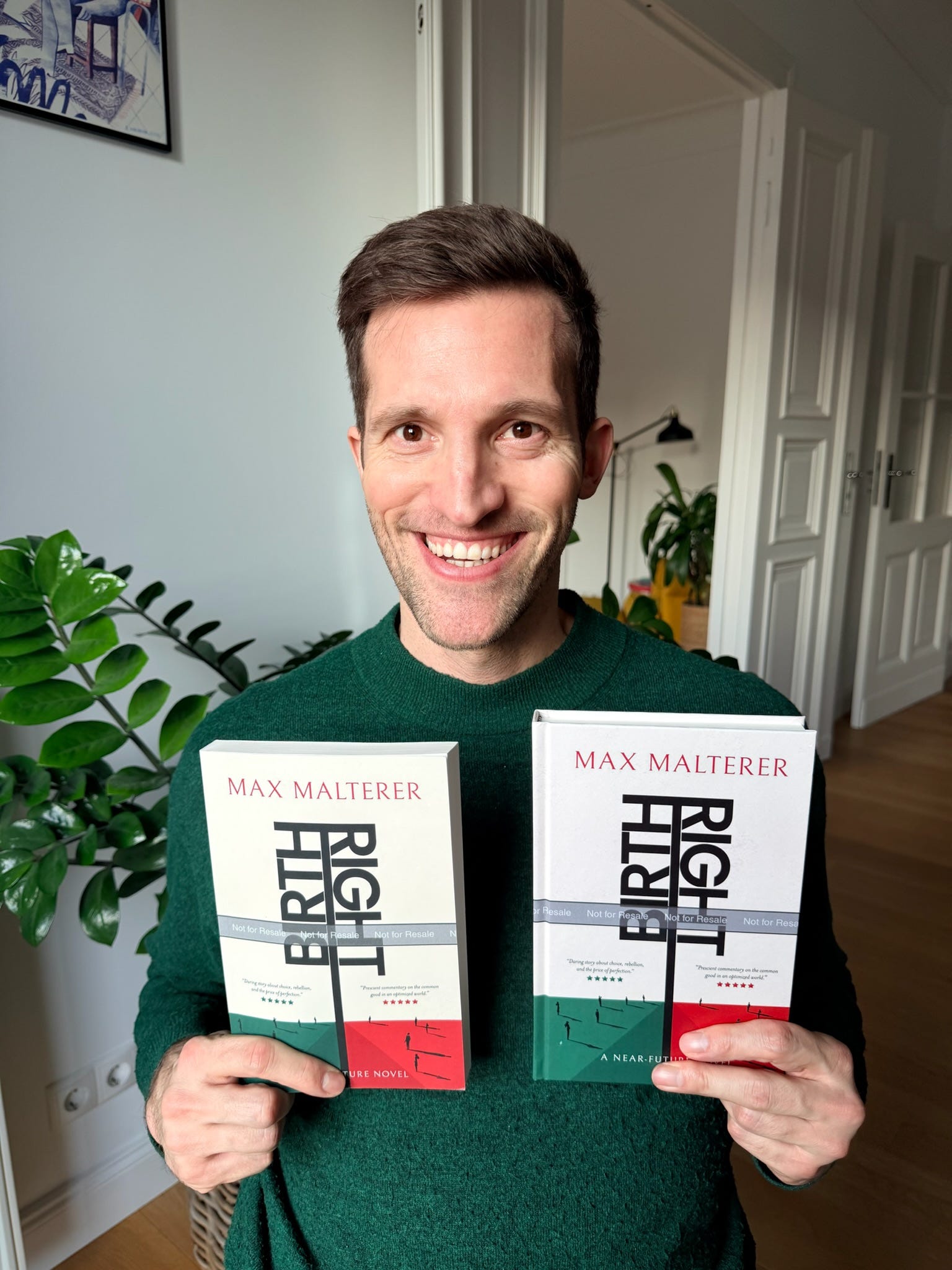
So today, with the finish line in sight, I want to talk about the part that’s been the most uncomfortable for me: putting a book into the world and helping it find its readers.
Before we get there, though, I want to rewind a bit.
Where the tension started
When I wrote the first draft of The Human Relief Project, I was just writing it for myself. I didn’t intend to publish it. I didn’t think about audiences, markets, or promotion. It was simply something I needed to write.
I remember staring at the finished manuscript and realizing that, now that it was there, I actually wanted to publish it. I could already see it lining the bookstores, topping bestseller lists, and euphoria grabbed hold of me.
But it didn’t last long and quickly gave space to something harder: admitting that to put the book into the world didn’t mean anything if nobody would find it. If it didn’t have a fair chance to be discovered.
That was the first time I really ran into the tension that’s been following me ever since: the pull between wanting to be an artist who releases a piece of work and lets go, and the part of me that knows that, without intention and effort, the book will simply disappear into the void.
I’ve written about that tension before in the context of HRP. But with Birthright, I had the chance to do things more deliberately — and also to get lost all over again, just at a slightly higher level and in spreadsheets with even more tabs.
This is where the struggle really started. There is so much advice out there on how to be successful as a self-published author: a never ending stream of books, courses, newsletters, YouTube channels, and Instagram influencers — all with strong opinions. And most of that advice converges on a very specific model: pick a high-performing genre (ideally romance or thrillers), write a series with three or five or ten books, publish multiple times a year, discount the first book aggressively, optimize ads relentlessly, and feed the machine.
Reading all of this didn’t make me feel motivated. It made me feel small. Like the books I wanted to write didn’t quite belong.
Don’t get me wrong, that model works for many authors and readers alike. And there is much I can learn from it. But the exact blueprint wasn’t going to work for me.
So, for Birthright, I tried to strip things back and start from first principles instead.
Starting from first principles
Starting from first principles wasn’t about being clever. It was about staying sane.
What kind of books do I actually want to write, and keep writing for years?
Who are the readers I genuinely want to reach? And how do I reach them in a way that feels respectful towards them, and honest to myself, while still being ambitious about the scale of my writing?
For me, the answer was pretty clear: I want the creation of the book itself to be uncompromised. I don’t want to reverse-engineer stories from market demand. I want to follow my curiosity, gut instinct, and that slightly uncomfortable writing flow where I don’t yet know where things will land.
But after the book exists — once it’s done — I do care deeply about it traveling. About it moving from reader to reader. About it finding people who are drawn to thoughtful, immersive, and quietly gripping near-future stories that sit somewhere between literary fiction and speculative realism.
So the question became: how do I promote a book without turning the whole thing into something artificial or performative?
Some of that now happens quietly in the background. The back matter of Birthright, for example — making it easy for someone who’s just finished reading the book to leave a review, tell a friend, read another book of mine, or subscribe here so I can reach them directly, without Amazon or Meta or Instagram in between.
Getting that right took me — as usual — a dozen iterations even though it’s just a few pages. But, I wanted them to speak to a reader who just finished Birthright in the right way, honoring their reading experiences and inviting them in rather than being salesy.
Then there were the public channels. Which brings me to…
Instagram. My frenemy.
I’m not a natural poster. As a writer, my raw material is… text. And my day-to-day reality too often looks like a laptop, a document, and a lot of staring into our backyard (where the neighbourhood fox regularly manages to distract me). Turning that into compelling posts and stories — aesthetic, but also honest and authentic — has been one of the hardest parts of my book promotion journey.
I don’t want to optimize for the algorithm. I don’t want to become a content mill. And, I definitely don’t want to chase likes for the sake of likes.
What I do want is to speak to readers who are looking for fiction that is slower, deeper, more thoughtful, but still engaging, immersive, and alive.
Instagram can help me reach those readers. But it requires intention, restraint, and a lot of iteration to do it my way, not the Instagram way. Some days it still feels deeply unnatural. And yet, I keep coming back.
With LinkedIn, interestingly, I feel much more comfortable. The medium itself suits longer thoughts, context, reflection. And there are a surprising number of people there who are genuinely curious about the kinds of questions my books explore.
Both platforms, for me, are less about “selling” and more about awareness so potential readers know about the book. And also, so that when someone does pick up the book and resonates with it, they can help it travel further on their preferred platform.
Besides the back matter and social media, there’s also paid promotion, something that I’ve just recently tried to understand better and find the right way for me.
A very common self-publishing strategy is heavy discounting on major reader mailing lists: 99-cent deals or free downloads of a book to lower the barrier to try out a new author. Many combine that with writing series where only the first book gets promoted, and then naturally readers want to move on to the rest of the series. That’s where the money is made, which in the end enables writers to live from their craft.
While I haven’t written a series (at least for now — never say never), I still see the value in those mailing list promotions: they lower friction, get more eyes on the book, and can be a powerful discovery tool. I’m experimenting here, slowly, trying to understand what fits my goals and my principles.
Longer-term, once the book is properly launched and there are enough early reviews, I’ll also start testing Amazon Ads, not as a growth hack, but as a way to meet readers who are already actively searching for their next great read.
Since it’s very hard to get my book into stores as an indie author — even into indie bookstores — digital channels are my best bet to reach new readers beyond word-of-mouth.
Launch day, and letting go
All of these promotion activities, from back matter and social media to paid promotion, converge on launch day itself.
That moment when the book goes live, and I ask — slightly uncomfortably, but sincerely — my Instagram community, my LinkedIn network, and you here on Substack to help give it a first push. To buy it if it speaks to you. To share it. To leave a review.
Those actions in the first days matter more than I wish they did. Not just emotionally, when full of hope I keep refreshing the dashboard every few minutes, but mechanically. They influence how much the book is surfaced to new readers who’ve never heard of me or Birthright before.
So yes. This whole journey remains a bit of a tug-of-war.
Between leaning fully into what feels true to me and working with how the book promotion world actually works. Between craft and reach. Art and infrastructure.
I’m still figuring out where that balance sits. But starting from first principles, encapsulated in my personal little manifesto, has helped me to stay oriented and to trust that slow, intentional traction is still traction.
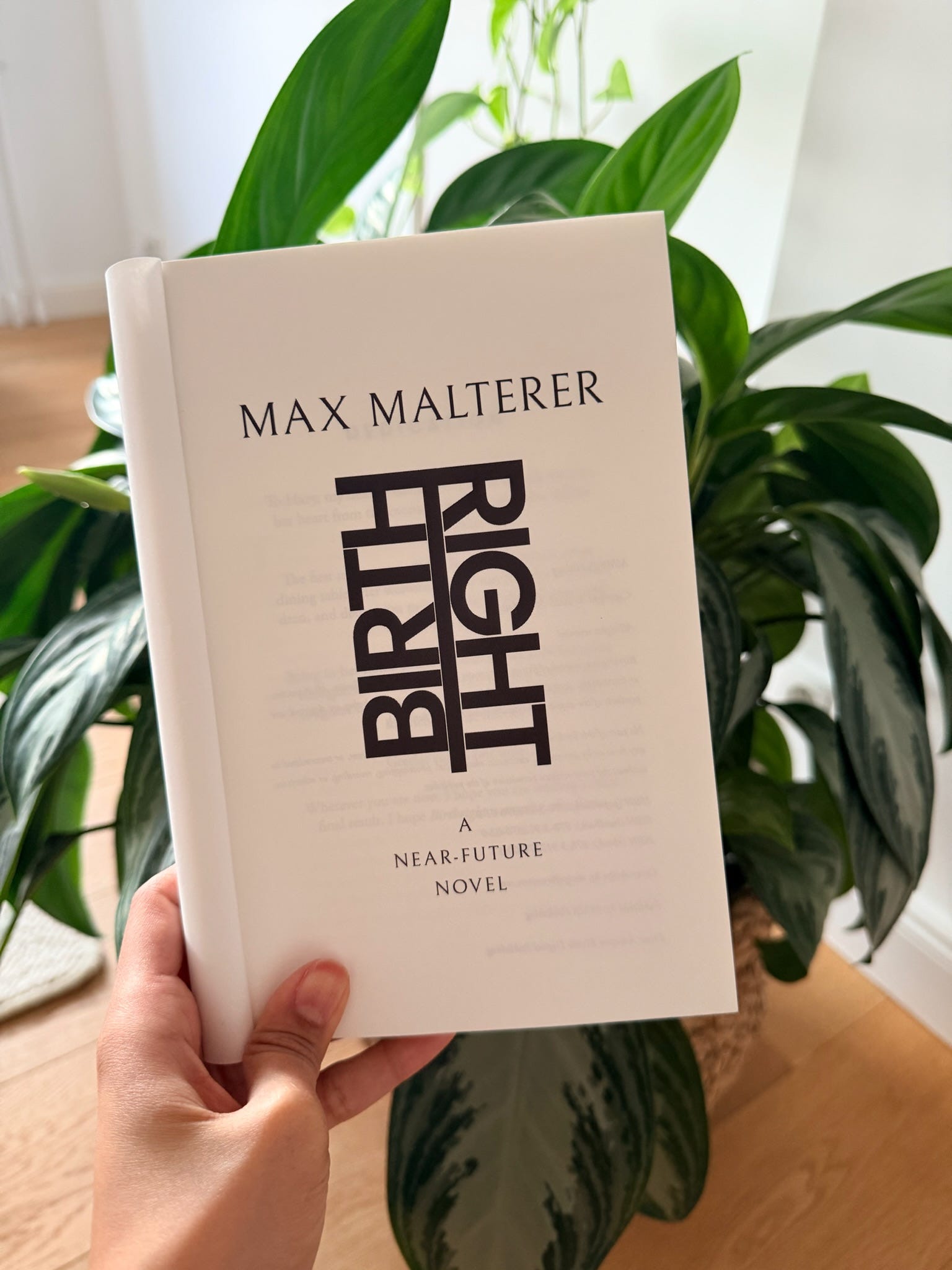
Birthright’s launch
The book goes live in ten days.
If you want to support the launch — and only if it genuinely resonates — here are a few simple ways:
If the book is interesting to you, or someone you know, buy it within the first days.
Like my posts and stories on Instagram and Linkedin, and reshare them with a personal thought on Birthright
If you buy the book, leave an honest review on Amazon and Goodreads sooner rather than later
Thank you, genuinely, for being part of this — for reading, supporting, and thinking alongside me. I’ll send a short update next Saturday once Birthright is officially out in the world.
Until then: keep reading. Always keep reading.
Max
If you haven’t subscribed yet, you’re very welcome to — it helps this newsletter find the readers it’s meant for.
And if you are already subscribed, feel free to share this with just one person who you think might genuinely enjoy it.
Can’t wait for Saturday 🙌